
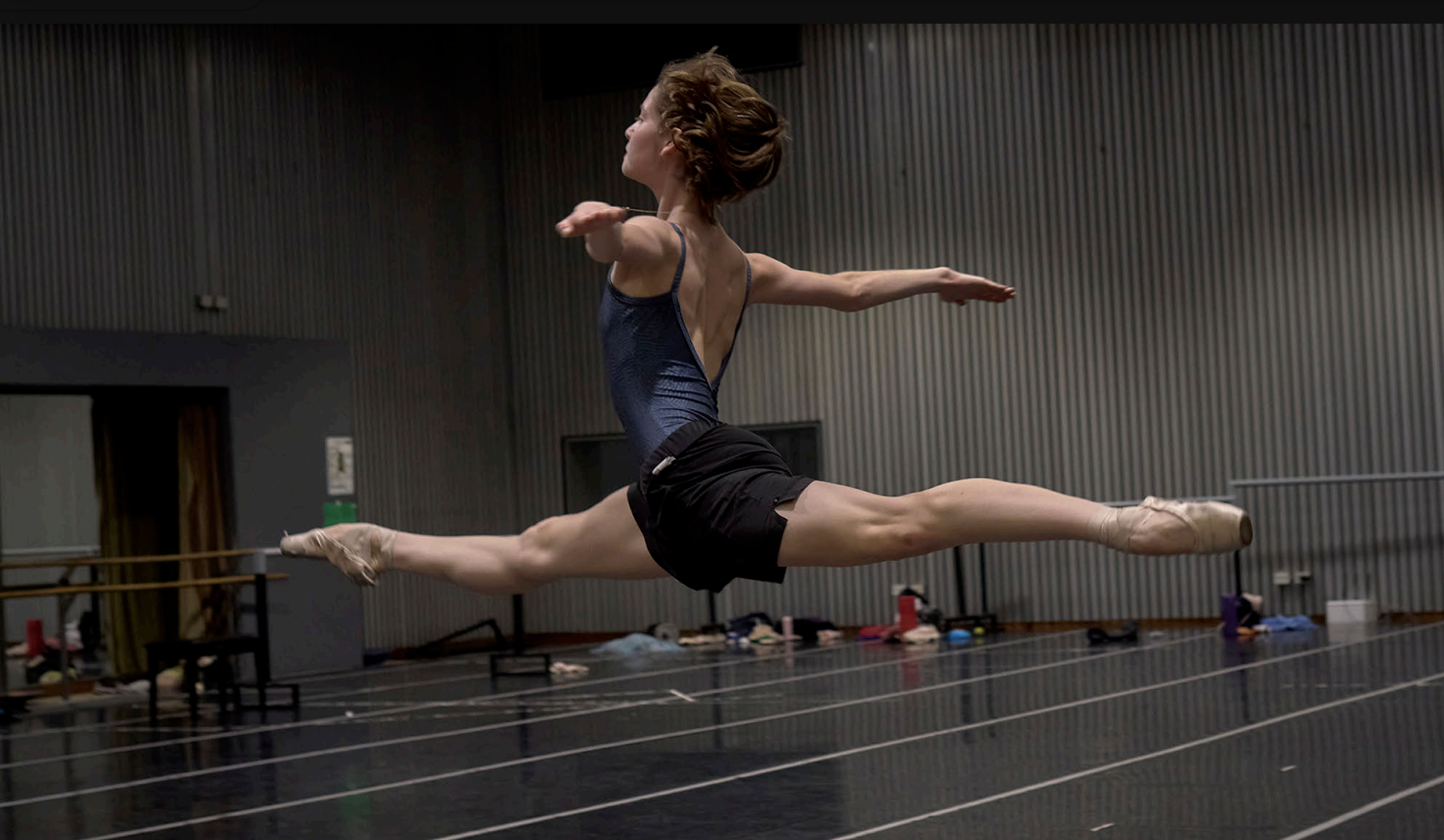
Elena Duarte - Sala 9 de Julio Teatro Colón
Mercedes Cepeda
Universidad Nacional de las Artes
Instituto Sudamericano para la Enseñanza de la Comunicación
contacto@mercedescepeda.com
Abstract: This article analyzes performing arts photography as a tool for documentation, preservation, and cultural transmission beyond its aesthetic dimension. Using a qualitative, descriptive and reflective approach, it considers the contributions of photographs to the study of technique and expressiveness, to teaching, to the comparison of different stages of a project, and to the construction of artistic, institutional and community memories. It also considers the photographer’s selective gaze and the need to identify, contextualize, organize and preserve images to sustain their documentary value. It concludes that photography does not replace the temporal experience of a performance but transforms its traces into documents accessible to artists, teachers, students, researchers, institutions and communities, thereby linking the present moment of performance to its future study and transmission.
Keywords: performing arts photography; documentation; cultural preservation; memory; archive; arts education.
Introduction
The performing arts exist in time as an unrepeatable present. The same work may be performed on numerous occasions, in different periods and places, but each performance depends on a particular combination of components: bodies, teachers, performers, gestures, sounds, spaces, costumes, lighting, interpretive and technical decisions, and audience responses.
When the performance ends, the experience remains in the emotions of the performers and spectators, when present, but that memory is personal, subjective, and changing. What remains of an artistic performance once it is over? Which elements of a tradition can be preserved in an image?
When faced with a photograph of a theatrical production, an orchestra, or a dance performance, our first response is often determined by what the image evokes: an emotion, a memory, or an aesthetic experience. At the same time, photography creates a sensory and material memory of some of the elements that made the performance possible and allows us to recognize part of the world surrounding that moment.
Performing arts photography does not merely preserve the final appearance of a performance. It can also document what made its existence possible: from processes of creation, training, and learning to rehearsals, staging, and final performance. Thus, an image initially perceived as a “good photograph” can become pedagogical material, institutional memory, a source for research, and a tool for cultural and historical preservation, among other functions.
This study proposes to analyze these different functions of performing arts photography and to reflect on its capacity to transform an ephemeral event into a document available for art, teaching, study, comparison, and transmission into the future.
The article adopts a qualitative, descriptive, and reflective approach, based on the analysis of the documentary functions of performing arts photography and on the systematization of experiences drawn from photographic, pedagogical, and artistic practice. Images are examined as records capable of preserving bodily, technical, gestural, material, spatial, cultural, and institutional information. Both individual photographs and photographic series produced during different stages of rehearsals, training processes, and performances are also considered.
1.The Ephemeral Nature of the Performing Arts
A performance is brief in time. Although a production may leave behind physical objects—scores, texts, costumes, instruments, sets, or programs—the performance as an event cannot be preserved in its entirety: every execution contains a degree of spontaneity that makes it particular and unrepeatable.
Before the emergence of photographic and audiovisual records, much of the information about performance practices was transmitted through written descriptions, oral accounts, graphic representations, and material objects. Anthropological, historical, and archaeological studies make it possible to reconstruct important aspects of the performing arts of the past, such as musical instruments, textiles, accessories, cosmetics, spaces, and customs.
However, the reconstruction of the specific appearance of performers, their bodily relationships, and the configuration of those performances necessarily remains incomplete. From these traces, we may imagine what a dramatic performance in Ancient Greece, a dance practice in a temple in ancient India, a dance in Egypt, or the performance of a musical piece in Persia may have looked like. Yet the small details that, over the centuries, are transformed, adapted, modernized, or disappear remain beyond our reach. It is at this point that the work of those who document and preserve the arts acquires fundamental value in keeping alive not only artistic manifestations themselves, but also their contexts, histories, and cultural meanings.
According to UNESCO (2003), identification, documentation, research, preservation, and transmission constitute central measures for safeguarding intangible cultural heritage.
2.Beyond Beauty: Photography as Documentation
Photographing the performing arts goes beyond obtaining an aesthetically appealing image or capturing a technically flawless execution. It involves recognizing and integrating the context that accompanies the performance. At times, the photograph with the greatest documentary value is not the one that isolates the most perfect bodily moment, but rather the one that makes it possible to understand the relationship between the performer, the space, the lighting, the objects, and the emotion of the scene.
In Indian dance, for example, expression and technique form a balance in which one dimension cannot be fully understood without the other. A posture may provide information about technical mastery, while gesture, gaze, makeup, costume, and the relationship with space contribute narrative, symbolic, and cultural information.
A single image therefore fulfills a dual role: it recreates a sensory experience for the viewer and, at the same time, documents objective elements that can be observed, described, and compared. Its value does not lie solely in what it evokes, but also in what it allows us to understand.
In this sense, theatrical photography can also be understood as both a document and a source for research, insofar as it preserves visual information that can later be observed and analyzed (Arenz, 2019).
Table 1 – Elements of a performing arts photograph and the dimensions it can preserve
Element | What It Preserves | What It Allows Us to Study |
|---|---|---|
Body | Technique, posture, line, tension, weight, axis, and relationship with gravity. | Technical analysis, teaching, and comparison between performers or stages. |
Gestures | Mudras, expressions, gazes, directions, and narrative codes. | Expressive, symbolic, and cultural interpretation. |
Costume and makeup | Textiles, embroidery, accessories, ornaments, hairstyles, and cosmetics. | Material history, design, stage identity, and tradition. |
Space | Stage, temple, hall, street, festival, and architectural context. | History of spaces, cultural uses, and stage arrangement. |
Lighting | Atmosphere, dramaturgy, lighting resources, and visual hierarchies. | Technical reconstruction, staging analysis, and aesthetic memory |
Group relationships | Hierarchies, formations, proximities, community, and ritual. | Composition, collective organization, and relationships among participants. |
Temporality | A micro-moment within an unrepeatable sequence. | tudy of movement, rhythm, and decisive moments. |
Emotion | Devotion, celebration, drama, intimacy, tension, or trance. | Performance interpretation, reception, and sensory memory. |
Instruments and objects | Materials, performance techniques, accessories, and props. | Musical, theatrical, technical, and cultural research. |
Context | Period, community, institution, festival, and production conditions. | Historical, academic, and institutional research. |
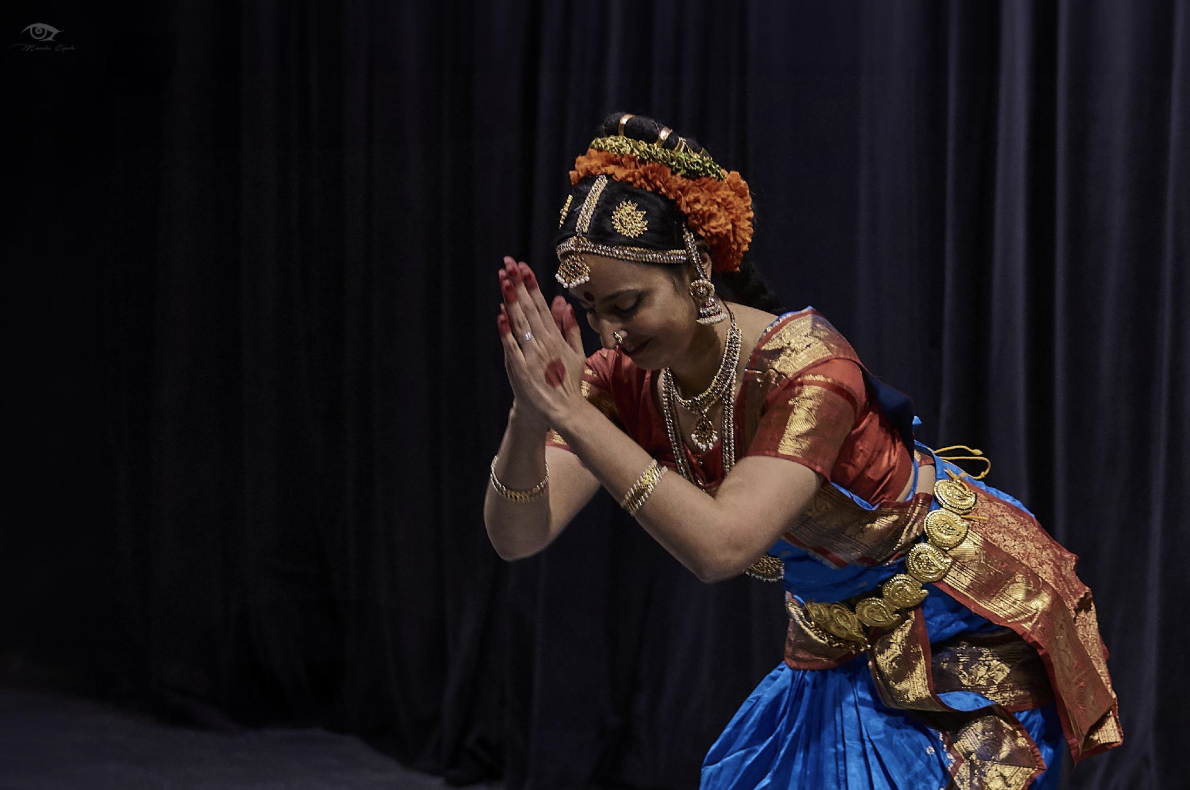
Asia Festival VIII – Manjula
3.The Body as an Ephemeral Archive
In the performing arts, the body is not limited to executing movement or producing music through an instrument. Through performance, the body narrates, evokes, encodes, and transmits. It preserves knowledge embodied through years of practice, relationships with teachers, repertoires, techniques, and culturally specific ways of understanding presence.
The performer’s body therefore acts as a living archive. However, each performance exists only for a limited period of time. Photography retains a fragment of that experience and transforms it into a document that can be observed, studied, and compared. Within this relationship between image, performance, and embodiment, the use of images can activate processes of documentation and memory, while also making it possible to represent and re-examine sensitive bodily experiences (Balbé & Torres Agüero, 2021).
Photography does not replace duration, sound, the continuity of movement, or the shared experience of a performance. Its specificity lies in isolating a micro-moment: it makes it possible to pause what happens too quickly during a performance and to render visible a bodily, emotional, spatial, or technical relationship.
Faced with the ephemeral, the camera preserves traces of gesture and transforms them into documentation. Within a fraction of a second, emotion, technique, and memory can coexist.
4.Photography as Pedagogical Material
Within pedagogical contexts, photography makes it possible to return to a specific moment in order to observe aspects that may go unnoticed during performance. It thus becomes a resource through which teachers and students can analyze technique, alignment, gesture, expression, use of space, and relationships with other performers. Teachers and students can use it as material for observing and comparing technical, gestural, expressive, and spatial elements. The image does not replace practical experience or teacher guidance, but it allows particular positions, relationships, and interpretive decisions to be reviewed afterward.
These possibilities show that performing arts photography can, depending on the context, be integrated as material for consultation and analysis within educational processes. Its specific applications in teaching and learning constitute a distinct line of research that will be developed in greater depth in a future study.
4.1. Rehearsals and Process Documentation
Documenting rehearsals expands the record beyond the finished performance. It makes it possible to preserve explorations, trials, modifications, decisions, and relationships that form part of the construction of a work but are not always visible in its final presentation. Photography can thus document the work of teachers, directors, performers, and other participants who sustain the production process.
An individual photograph preserves information about a specific moment; a series makes it possible to relate different moments within a process. When images are dated, identified, and organized, they can make technical, spatial, lighting, choreographic, or material transformations visible and contribute to understanding how a work reaches a particular configuration.
In the field of dance, documents acquire particular relevance in relation to the ephemeral nature of performance practice, since they can function as traces for its memory, analysis, and subsequent reconstruction (Cadús & Dorin, 2012).
Images 2, 3, and 4 record different moments from the same Talleres Coreográficos rehearsal. The series makes it possible to observe situations of work, instruction, exchange, and stage construction that would not be represented with the same breadth in a single photograph.
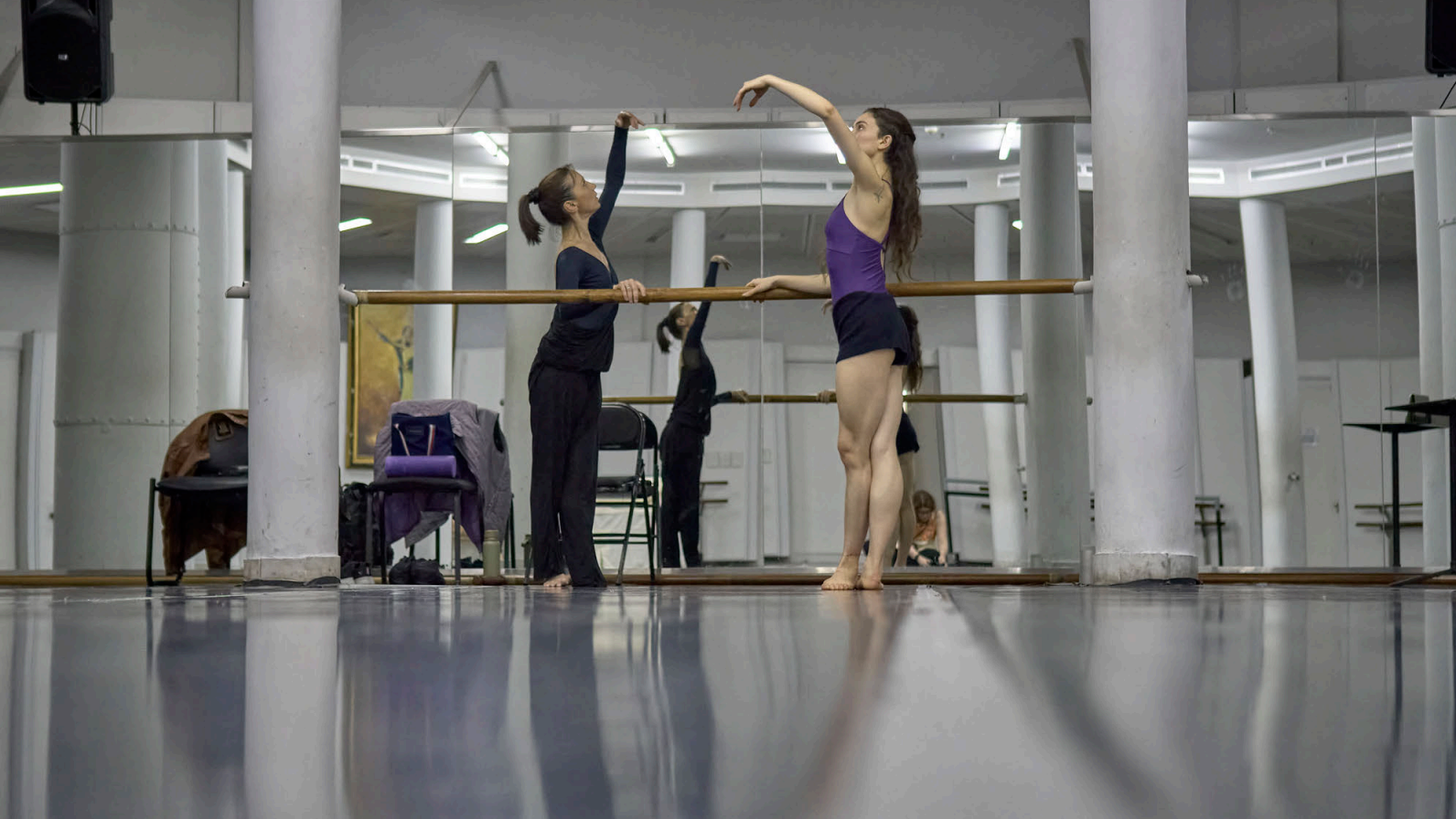
Ensayo Talleres Coreográficos 2024 – Maricel De Mitri y Caterina Stutz – 11 de octubre de 2024 – Sala Rotonda – Teatro Colón de Buenos Aires.
Ensayo Talleres Coreográficos 2024 – Maricel De Mitri y Caterina Stutz – 11 de octubre de 2024 – Sala Rotonda – Teatro Colón de Buenos Aires.
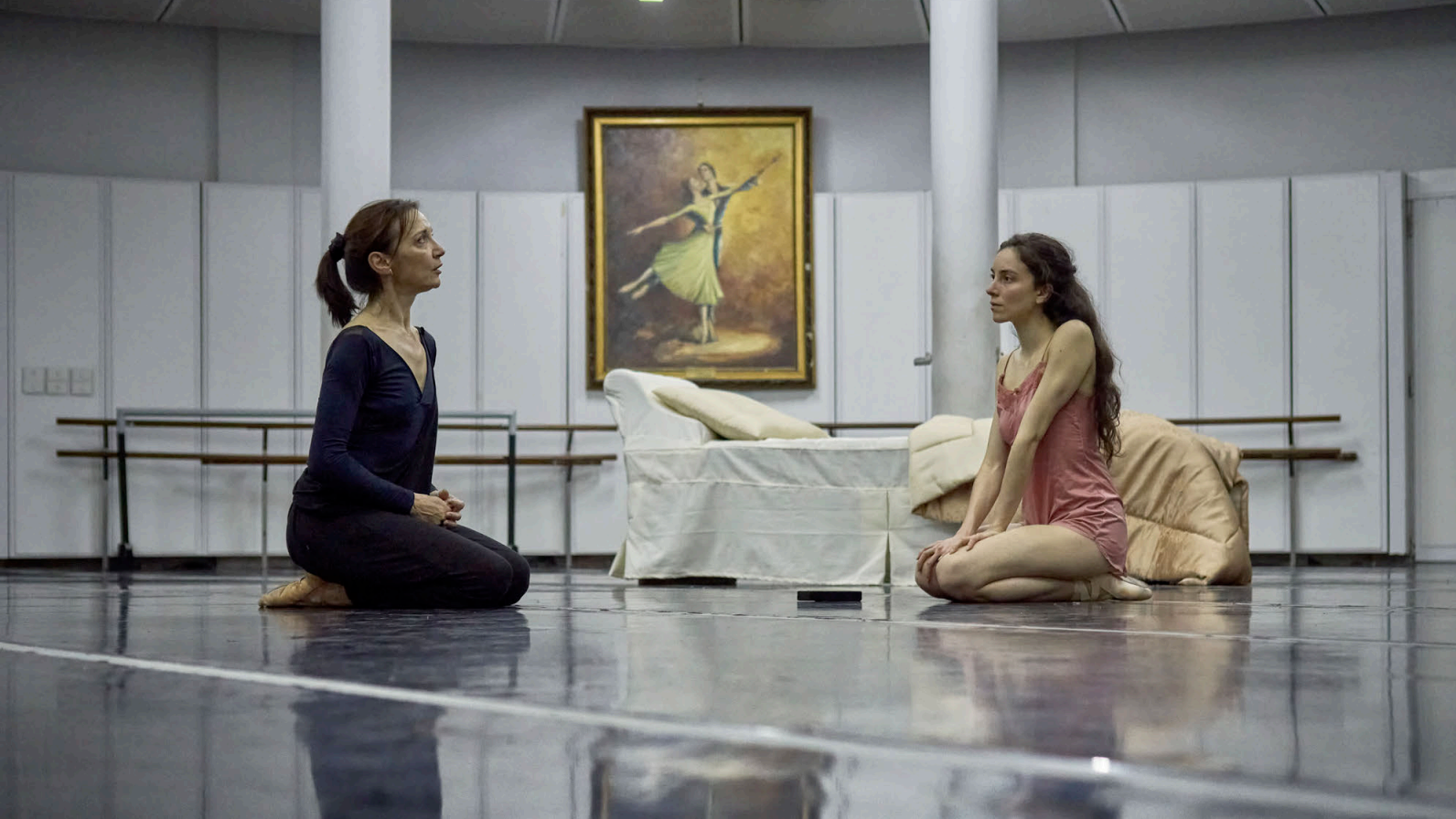
Ensayo Talleres Coreográficos 2024 – Maricel De Mitri y Caterina Stutz – 11 de octubre de 2024 – Sala Rotonda – Teatro Colón de Buenos Aires.
Ensayo Talleres Coreográficos 2024 – Maricel De Mitri y Caterina Stutz – 11 de octubre de 2024 – Sala Rotonda – Teatro Colón de Buenos Aires.
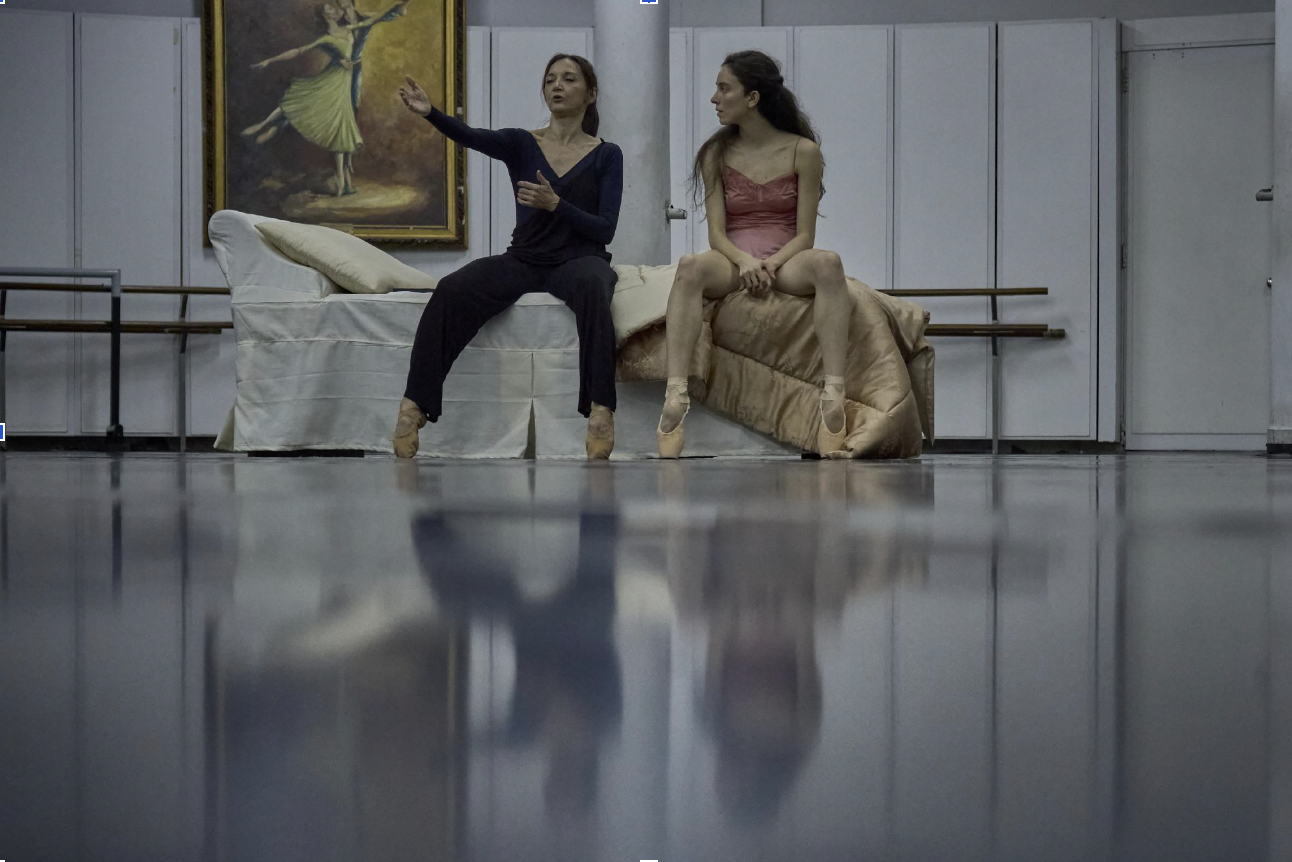
Ensayo Talleres Coreográficos 2024 – Maricel De Mitri y Caterina Stutz – 11 de octubre de 2024 – Sala Rotonda – Teatro Colón de Buenos Aires.
Ensayo Talleres Coreográficos 2024 – Maricel De Mitri y Caterina Stutz – 11 de octubre de 2024 – Sala Rotonda – Teatro Colón de Buenos Aires.
5. The Image as Cultural and Institutional Testimony
Performing arts photography can become an archive for artists and companies, a memory resource for festivals and theaters, material for cultural outreach, a source for academic research, and a tool for constructing artistic identity. Each audience finds a different type of information within it.
Table 2 – Audiences and Possible Uses of Performing Arts Photography
Audience | What They Can Find in the Photograph |
|---|---|
Artist or performer | Posture, expression, technique, stage presence, and development. |
Teacher | Material for explaining, indicating, correcting, and comparing. |
Student | Bodily, gestural, spatial, technical, and stylistic reference. |
Company | Memory of repertoire, cast, creative processes, and staging. |
Festival or theater | Institutional history, programming, and transformations of spaces. |
Researcher | Cultural, technical, social, aesthetic, and historical information. |
Designer or production artist | Costume, makeup, set design, lighting, props, and objects. |
Community | Identity, shared memory, visibility, and cultural continuity. |
Audience | Aesthetic experience, emotion, and access to a work or tradition. |
5.1. Spaces and Material Elements
Photography preserves information about costumes, sets, lighting, gestures, repertoires, and the spatial arrangement of artists and the components of a work. It also preserves the appearance of theaters, halls, stages, streets, sanctuaries, and festival spaces that may be modified, deteriorate, or disappear over time.
Comparing records produced in different years makes it possible to identify architectural, technical, and aesthetic transitions. In this way, the photographic archive not only preserves productions: it also records the spaces and material conditions that made their existence possible.
5.2. Outreach, Identity, and Research
When circulated, a photograph can bring an artistic practice closer to people who did not attend the performance and contribute to its recognition. In institutional contexts, images participate in the construction of the memory and identity of artists, companies, festivals, and communities. In academic contexts, they make it possible to formulate questions, compare historical moments, and relate bodily, spatial, material, and social components.
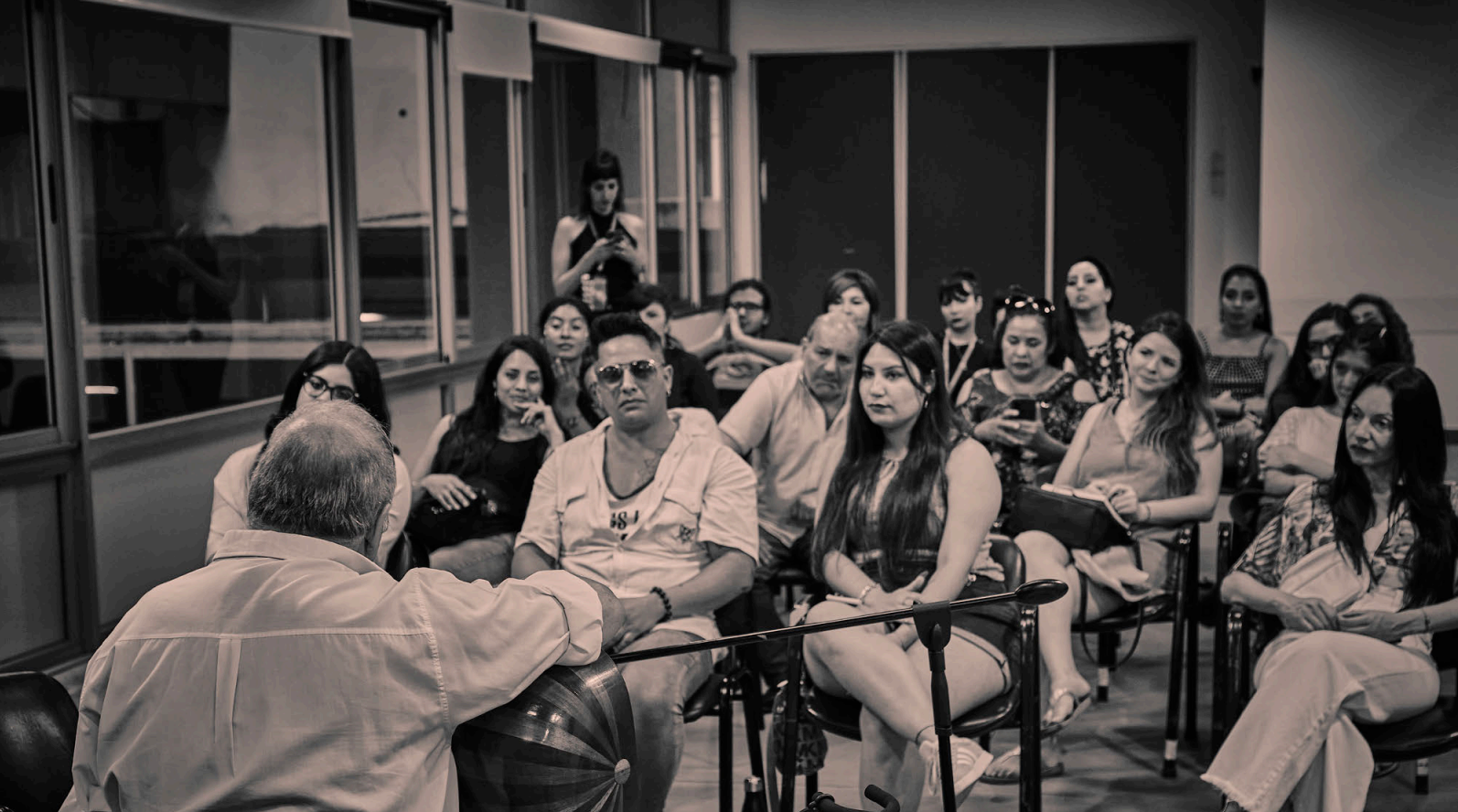
Asia Festival XI – Mario Kirlis en «El laúd árabe: conferencia demostrativa»
6.The Photographer’s Gaze: Selection and Interpretation
A photograph is not a neutral reproduction of everything that occurred. The photographer selects a position, a frame, and a moment; decides which relationship between body and space to show, which gesture is considered significant, and which elements are included in or excluded from the image. These decisions influence the information that can be preserved and subsequently retrieved.
The viewer, the photographer, and the subject of the image may each read a story within it. That reading will be personal and subjective, but it will coexist with observable and practical elements. Photography thus fulfills a dual role: it documents and, at the same time, recreates the art on stage as a sensory experience that can extend beyond the performance. A technically impeccable image is not necessarily the most complete document, just as a technical flaw does not guarantee greater authenticity. Documentary value depends on what the photograph makes visible, on its legibility, and on the contextual information that accompanies it. In certain situations, an image that integrates performer, space, light, and emotion may be more significant than one that isolates a perfect bodily position.
6.1. A Perspective from Artistic Practice
My approach to performing arts photography stems from prior and everyday experience with dance, music, and teaching. For me, photography did not mean entering unfamiliar territory, but rather extending through the camera a way of observing the body, gesture, rhythm, and expression that was already part of my life.
This knowledge allows me to follow the moment alongside the performers, anticipate movements, and recognize moments that possess technical, expressive, or symbolic value. Photography thus becomes an extension of artistic experience and, at the same time, a tool for preserving it.
Rather than conceiving of my areas of knowledge as separate fields, I have integrated them. My experiences in dance, music, traditional cultures, and photography converge in a perspective that seeks not only to produce a good image, but also to disseminate knowledge and bring people closer to art and culture from another perspective.
7.From the Stage to the Archive
The production of a photograph does not in itself guarantee preservation. For an image to maintain and expand its documentary value, it needs to be selected, identified, contextualized, organized, and preserved. A photograph without information may continue to evoke an aesthetic experience, but it may lose part of its capacity to explain who appears in it, what work was performed, where it took place, and to which moment in the process it belongs.
According to UNESCO (2015), documentary preservation encompasses procedures aimed both at preserving documents and at protecting the information they contain and ensuring its accessibility.
Among the data that strengthen its documentary function are:
title of the work or activity;date and place;names of performers and participants;
company, school, institution, or festival;
direction, authorship, and other relevant roles;
technique, tradition, or repertoire represented;
identification of the rehearsal, performance, or stage of the process;
name of the photographer and conditions of use;
description, keywords, and relationship to other images in the series.
The archive transforms isolated photographs into a searchable collection. Dating and description make it possible to compare processes, retrieve previous records, and relate images produced at different moments. In this way, preservation depends not only on having taken the photograph, but also on ensuring that the image remains accessible, legible, and connected to its context.
The differences between documentation prior to digitization and current practices open another field of analysis that lies beyond the scope of this study. It is sufficient to note that both present advantages and risks: digitization expands access to, reproduction, and circulation of images, but it also introduces new forms of fragility associated with file loss, technological obsolescence, and lack of contextualization.
8.Conclusion: Memory Also Needs Light
When a performance ends, the continuity of the event is interrupted: the present sound, the totality of movement, and the unrepeatable relationship between performers, space, and audience disappear. The body retains the knowledge learned and transmitted, but the specific performance vanishes at the very moment it occurs.
Photography does not replace that experience. It preserves traces: a gesture, a spatial relationship, a material detail, an atmosphere, a technical decision, or an emotion. By capturing these micro-moments, it transforms them into documents that can be observed and analyzed by artists, teachers, students, researchers, institutions, and communities. Photographing the performing arts involves choosing the symbol rather than the snapshot and understanding that the beauty of an image is not opposed to its documentary value. A good photograph can evoke emotion while simultaneously containing information about the bodies, techniques, processes, spaces, and cultures that made a work possible.
When that image is contextualized, organized, and preserved, it travels from the stage to the archive and from the present into the future. Photography then becomes a tool for transmission: it allows us to return to what occurred, learn from it, compare it, and keep it available for new generations. Memory also needs light.
Note. Images 1 and 5 correspond to Asia Festival activities, a cultural project organized by Estudio Sahar since 2012 (Estudio Sahar, n.d.). Photographs by the author.
References
Estudio Sahar. (s. f.). Asia Festival. https://estudiosahar.com/web/asiafestival/
UNESCO. (2003). Convención para la salvaguardia del patrimonio cultural inmaterial. https://www.unesco.org/es/legal-affairs/convention-safeguarding-intangible-cultural-heritage
UNESCO. (2015). Recomendación relativa a la preservación del patrimonio documental, comprendido el patrimonio digital, y el acceso al mismo. https://www.unesco.org/es/legal-affairs/recommendation-concerning-preservation-and-access-documentary-heritage-including-digital-form
Balbé, W., & Torres Agüero, S. (2021). Del cuerpo-ojo al cuerpo-todo. El uso de imágenes en las estrategias de performance-investigación. Revista de Antropología Visual, 29, 1–17. https://doi.org/10.47725/RAV.029.02
Cadús, M. E., & Dorin, P. (2012). Archivo Fumagalli: Cuestiones para abordar el documento de danza. IV Jornadas Nacionales de Investigación y Crítica Teatral, Buenos Aires, Argentina. Asociación Argentina de Investigación y Crítica Teatral. Registro institucional del trabajo en CONICET
* automatic translation for english version
1 comment