
Marina Barrionuevo
Universidad del Salvador
Asociación Civil Estudio Sahar
info@estudiosahar.com
Between Myth and History: Contemporary Debates on the Origins of Bellydance
Abstract: The origin of Bellydance is one of the most debated topics within its historiography. Throughout the 20th century, various interpretations emerged attempting to link this practice to fertility cults, religious rituals, and traditions of Ancient Egypt. However, these proposals have been questioned by recent historiography due to the lack of historical evidence demonstrating a direct continuity between dances documented in Ancient Egypt and the forms of Bellydance developed since the late 19th century. This paper critically reviews the main theories regarding the origins of Bellydance and analyzes the available archaeological, textual, and historiographical evidence. Based on a review of sources from Ancient Egypt and medieval Arab-Islamic societies, it argues that, although dance was widely documented throughout different historical periods, current evidence does not allow for the establishment of an uninterrupted line of historical continuity between these manifestations and the forms of Bellydance documented from the late 19th century to the present.
Keywords: Bellydance, Ancient Egypt, Orientalism, Dance History.
Introduction
The origin of Bellydance is one of the most debated topics within dance historiography. Since the mid-20th century, various interpretations have attempted to explain its historical antecedents, linking it to fertility cults, female religious rituals, practices associated with the so-called Mother Goddess, and artistic manifestations of Ancient Egypt. These proposals achieved wide circulation both in academic contexts and in educational materials for dancers, contributing to the consolidation of certain narratives about the past of this practice.
However, in recent decades, various researchers have begun to question these interpretations. Authors such as Shay (2006, 2026), Sellers-Young (2005, 2014), van Nieuwkerk (1995), and Karayanni (2009) have pointed out that many traditionally accepted theories are based on cultural analogies, speculative interpretations of archaeological evidence, and Orientalist conceptions of the Middle East. From this perspective, the existence of dance in ancient societies does not constitute sufficient evidence to demonstrate direct historical continuity with the forms of Bellydance documented in later periods.
In this regard, various studies have highlighted the need to distinguish between the historical existence of dance in different societies and the possibility of establishing continuity links between these practices and the Bellydance developed over recent centuries. This distinction is essential for critically evaluating theories that propose an ancient origin for the dance and for determining the actual scope of the evidence currently available.
The present study aims to critically review the main theories regarding the origins of Bellydance and analyze the available archaeological, textual, and historiographical evidence. Based on this review, it seeks to evaluate the scope and limitations of existing sources in order to determine the extent to which historical connections can be established between dances documented in Antiquity and the forms of Bellydance developed since the late 19th century.
Theories on the Origins of Bellydance
In general terms, theories regarding the origins of Bellydance can be grouped into three main currents. The first consists of spiritual interpretations linked to the New Age movement and the Mother Goddess cult. The second corresponds to Egyptocentric theories, which place the origins of the dance in Ancient Egypt. Finally, a third current, represented by various contemporary researchers, argues that it is not possible to demonstrate direct historical continuity between ancient practices and contemporary Bellydance, proposing the emergence of Bellydance between the late 19th and early 20th centuries (Shay and Sellers-Young, 2005).
Within the first group, sometimes referred to as “Spiritual Bellydance,” which emerged during the 1960s and 1970s, the feminist ideas of authors such as Simone de Beauvoir, Betty Friedan, and Kate Millett played an influential role. This movement reinterpreted dance as a tool for female empowerment and reconnection with ancestral forms of spirituality (Shay and Sellers-Young, 2005).
Several authors developed theories linking Bellydance to fertility, motherhood, and matriarchal cults (Dox, 2005). Among the most influential are Dinicu (1964), Buonaventura (1990), Al-Rawi (1999), and Stewart (2000).
Dinicu (1964) linked dance to fertility and childbirth rituals, although without providing conclusive evidence. Al-Rawi (1999), for her part, developed a universal history of female dance centered on the Mother Goddess, incorporating elements from New Age spirituality without solid historical foundations. Buonaventura (1990) associated Bellydance with fertility cults present in various ancient civilizations, even relating Ishtar to Salome and the so-called “Dance of the Seven Veils.” Finally, Stewart (2000) proposed renaming Bellydance as “Female Dance” and considered it the oldest female ritual of humanity.
These authors share several common features: the conception of a religious and ritual origin of dance, the centrality of women and the Mother Goddess cult, the idea of a transition from sacred dance to performance dance, and the use of intercultural analogies to fill historical gaps.
These interpretations have received significant criticism. Shay and Sellers-Young (2005) argue that Buonaventura constructs a past of Bellydance that combines pantheism, spirituality, and primitivism, linking various ancient goddesses with the aim of conveying a feminist and neo-pagan message. They also consider that these proposals reproduce some of the mechanisms described by Said (1978) in his theory of Orientalism, by presenting the East as primitive, spiritual, and ancient.
Along the same lines, Shay and Sellers-Young (2005) argue that many Western feminists adopted Bellydance as a symbol of female sexual liberation and romanticized its historical origins. Consequently, contemporary studies tend to consider these theories as influential cultural constructions, but insufficiently supported from a historical perspective.
The Methodological Problem of Demonstrating Historical Continuity
Beyond the differences between the various theories, one of the main problems lies in the methodological difficulties inherent to the study of dance in ancient societies. Anthony Shay (2026) points out that much of the literature dedicated to the origins of Bellydance continues to reproduce Orientalist narratives that present these dances as unchanged survivals of ancestral rituals associated with fertility, female spirituality, or the worship of ancient deities. The East is represented as a place of great antiquity and profound spirituality, immutable, silent, fertile, and feminine.
Both practitioners (who often display various forms of exoticism and self-exoticization) and academics appear to be attracted to forms that claim to be ancient. Shay (2026) indicates that many of these interpretations respond to the desire to attribute an exceptional antiquity to the dance, as if its supposed millenary origin made it more valuable, meaningful, or respectable. From this perspective, origin theories are not only historical explanations but also symbolic mechanisms of legitimization. In Hobsbawm’s (1983) terms, they could be interpreted as processes of constructing invented traditions, through which a symbolic continuity with a remote past is established in order to provide authority and meaning to contemporary practices.
Along the same lines, Sellers-Young (2014) argues that contemporary perceptions of dance are constructed through images, discourses, and cultural representations that mediate the way individuals interpret both the past and the present. From this perspective, narratives that present Bellydance as a direct survival of ancestral practices should also be understood as contemporary cultural constructions and not merely as historical descriptions.
These narratives also reproduce some of the characteristics that Edward Said (1978) identified as inherent to Orientalism: the representation of the East as an ancient, spiritual, static space, essentially different from the West. As Dox (2006) points out, in certain Western discourses related to Bellydance, these images are positively reinterpreted as symbols of ancestral wisdom, authenticity, and spirituality, in contrast with a Western modernity perceived as materialistic or lacking depth. In this context, attributing millenary origins to the dance not only seeks to explain its past but also transforms it into a repository of values considered lost in the present. As a consequence, Bellydance is frequently presented as a surviving relic of a remote past rather than as the result of complex historical processes.
Even if we were to accept the existence of dance representations in Antiquity, this does not imply that we can reconstruct the forms of movement that gave rise to them. As Shay (2026) points out, no contemporary researcher directly observed the dances of ancient societies; consequently, any reconstruction depends exclusively on indirect sources. Shay further argues that the reconstruction of any ancient dance is not possible and that the use of iconographic sources is filled with challenges due to the limitations inherent to archaeological evidence.
Garfinkel (2003), one of the leading scholars in the archaeology of dance, argues that the earliest iconographic evidence shows predominantly collective forms of dance, performed in lines and circles. However, the author himself recognizes that these representations record only a small portion of the richness of human movement and do not allow for the establishment of direct links with later forms of dance.
Tyler (2010) warns that iconographic interpretations can lead to significant errors, while Shachter (2014) points out that preserved two-dimensional images from Ancient Egypt do not provide reliable indications of the movements that inspired the represented scenes.
One of the main problems lies in the fragmentary nature of the archaeological record. Many scenes have been lost, deteriorated, or incorrectly recorded. Furthermore, access to certain sites remains restricted.
Added to this is the fact that preserved representations are static images. Unlike modern audiovisual recordings, Egyptian paintings and reliefs do not allow movement sequences to be reconstructed in the same way. Consequently, it is impossible to determine with certainty how the represented dances were performed.
Egyptian artistic conventions constitute another important obstacle. Bleiberg (2005) points out that the human figure was represented according to specific iconographic rules: the eyes and shoulders were shown frontally, while the body was represented in profile. Likewise, bodily proportions followed symbolic and hierarchical criteria rather than naturalistic representation.
Finally, there is a terminological problem. Meyer-Dietrich (2009) identified at least eighteen different verbs used to describe actions that today could be associated with dance. However, their meanings varied according to the historical period and do not necessarily correspond to those of contemporary societies. Therefore, in agreement with Shachter (2014), it is first necessary to evaluate what was understood as dance —and what was not— in Ancient Egypt.
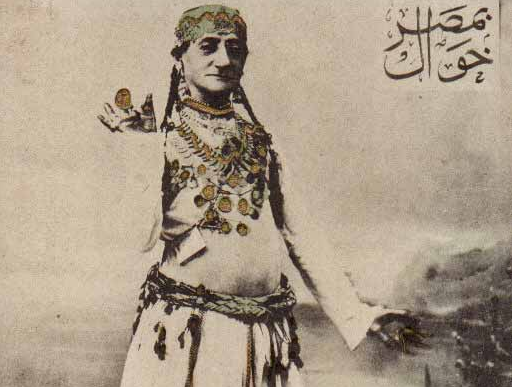
Shay (2026) indicates that even for much more recent periods, we do not know, for example, exactly what the “oriental” dancers who participated in the Chicago World’s Fair in 1893 did or how they danced. We only know that contemporary spectators considered their performances exciting and scandalous.
These limitations explain why establishing a direct continuity between representations of dance in Ancient Egypt and contemporary Bellydance is extremely difficult. The existence of dance representations in Ancient Egypt does not constitute sufficient evidence to affirm the existence of Bellydance during that period.
Dance in Historical Sources
The methodological criticisms presented above do not imply denying the existence of dance in ancient societies. On the contrary, archaeological, iconographic, and textual evidence demonstrates that dance was widely present in different regions of the Middle East and North Africa throughout history. However, as Garfinkel (2003), Shachter (2014), and Shay (2026) point out, the existence of dance in a given period does not, in itself, constitute evidence of historical continuity with later forms of dance.
Ancient Egypt
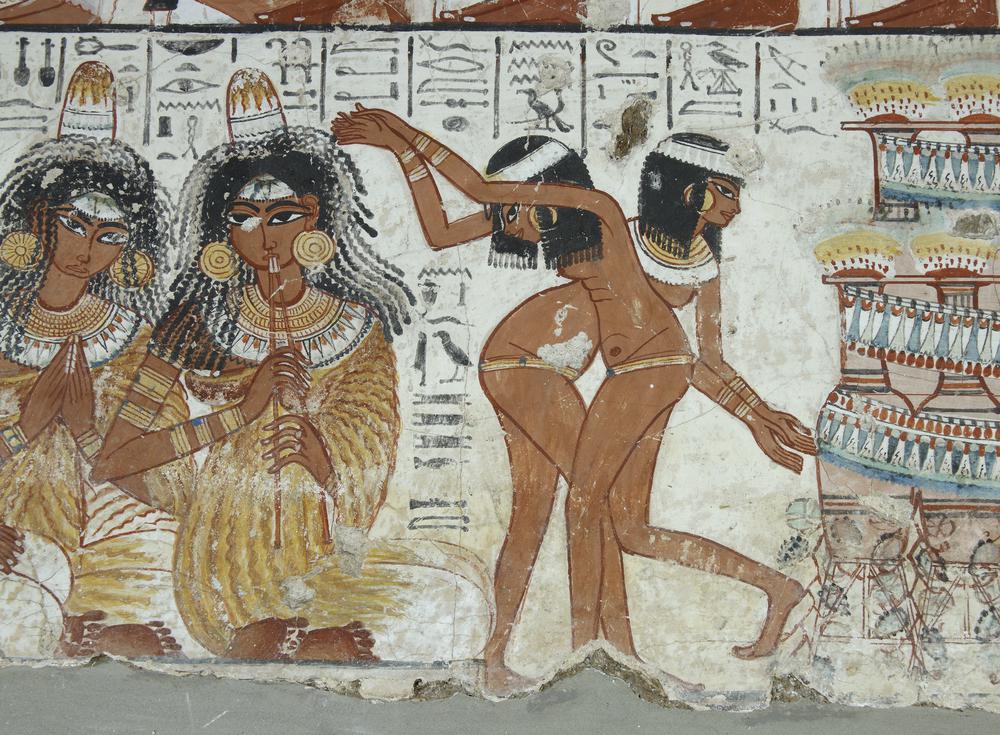
The earliest possible evidence of dance in Egypt dates back to the Predynastic Period (ca. 5000 BCE) and can be observed in engravings and paintings on pottery, as well as in rock drawings. Throughout the dynastic periods, iconographic evidence expanded through wall scenes in tombs, seals, palettes, and other forms of representation.
Within this corpus, female figurines with U-shaped arms, known as “the celebrants,” stand out. Within Bellydance discourse, they are often cited as evidence of dance in Ancient Egypt; however, their interpretation remains a matter of debate. While some researchers associate them with rituals, victories, or expressions of gratitude, there is no consensus regarding their precise meaning.
During the dynastic period, dance is documented in funerary, religious, and social contexts. The iconographic record shows that it was part of processions, rites of passage, banquets, and agricultural celebrations (Spencer, 2003; Kinney, 2008; Lexova, 1999). These activities could be performed by both men and women, professionals or non-professionals, in public or private contexts.
Textual sources also demonstrate the importance of dance. The scribe Any, in a text of instructions, mentions that “song, dance, and incense are his food,” referring to offerings dedicated to the deities (Cummings, 2000). Likewise, in the Tale of Sinuhe, dancers are part of the funerary honors accompanying the deceased to his tomb.
These testimonies allow us to affirm that dance held a significant place within the religious and social life of Ancient Egypt. However, as Shachter (2014) and Shay (2026) warn, the inherent limitations of the available sources prevent the precise reconstruction of the movements, techniques, and meanings of these manifestations. Consequently, although the existence of dance in Ancient Egypt is documented, the evidence currently available does not allow for the establishment of a direct historical continuity between these practices and the forms of Bellydance developed from the late 19th century onward.
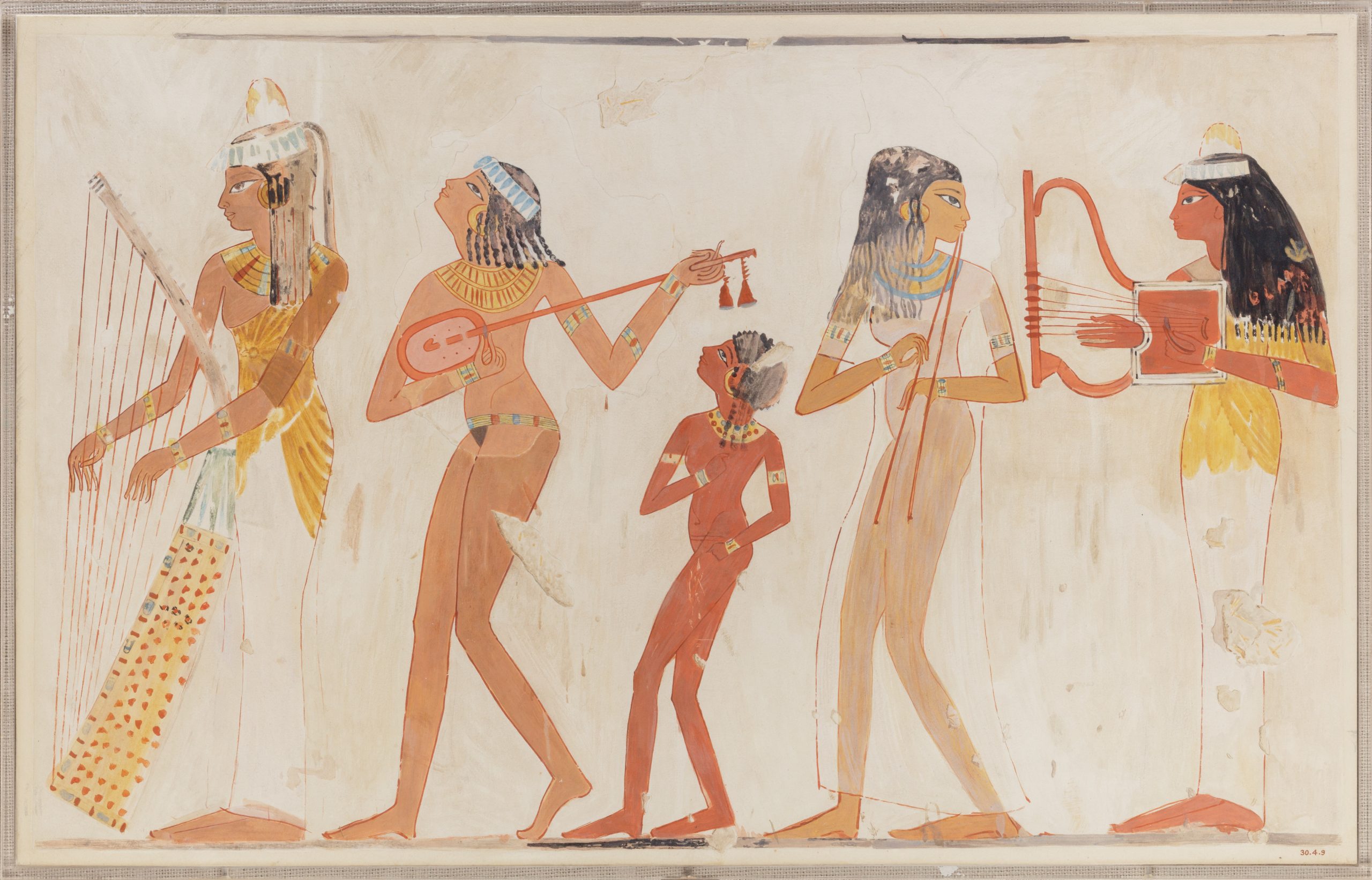
Mujeres tocando instrumentos
Medieval Arab-Islamic Societies
Textual sources produced during the early centuries of Islam provide more detailed information about dance than that available for earlier periods. These sources describe performers, performance contexts, technical qualities, and even specific terminology related to dance.
One of the earliest references appears in the Kitāb al-Aghānī (The Book of Songs). It recounts how Isḥāq al-Mawṣilī, after a remarkable musical performance, stood up and began to dance, moved by the ecstasy generated by the musical interpretation [1] (Sawa, 2015). This passage illustrates how dance formed part of courtly musical contexts and that there were individuals specifically recognized for their skills as dancers.
During the Abbasid period, authors such as al-Fārābī (870–950) incorporated dance into their theoretical reflections on music. Al-Fārābī distinguishes between zafn and raqṣ, considering both as forms of rhythmic bodily organization, although with different characteristics [2] (Sawa, 2015). His classification demonstrates that dance was conceived as a phenomenon worthy of intellectual analysis and not merely as entertainment.
Similarly, Ibn Khaldūn (1332–1406) describes the existence of professionals specialized in dance, as well as specific repertoires, costumes, and stage elements. According to his account, during the Abbasid period, performances developed that included songs composed to regulate the movements of dancers, eventually becoming a distinct profession.
Particularly relevant is the testimony of al-Masʿūdī (896–956), who provides one of the most detailed descriptions of dance. The author lists different rhythmic modes and describes the ideal qualities of a dancer, including physical, technical, and expressive aspects. Among these, he mentions mastery of rhythm, bodily flexibility, the ability to turn, foot control, and interpretive creativity.
The sources also document the existence of professional artists such as the qiyān, enslaved women specialized in music, poetry, and courtly entertainment, some of whom likely included dance within their repertoires. Likewise, figures such as the mukhannathūn, the ghulāmīyāt, and other artists associated with musical and performative contexts are recorded.
Taken together, these sources allow us to affirm that dance occupied a significant place within medieval Arab-Islamic societies. However, although they provide much more detailed information than that available for earlier periods, they also do not allow for the establishment of an uninterrupted historical line of continuity between these practices and the forms of Bellydance documented from the late 19th century onward.
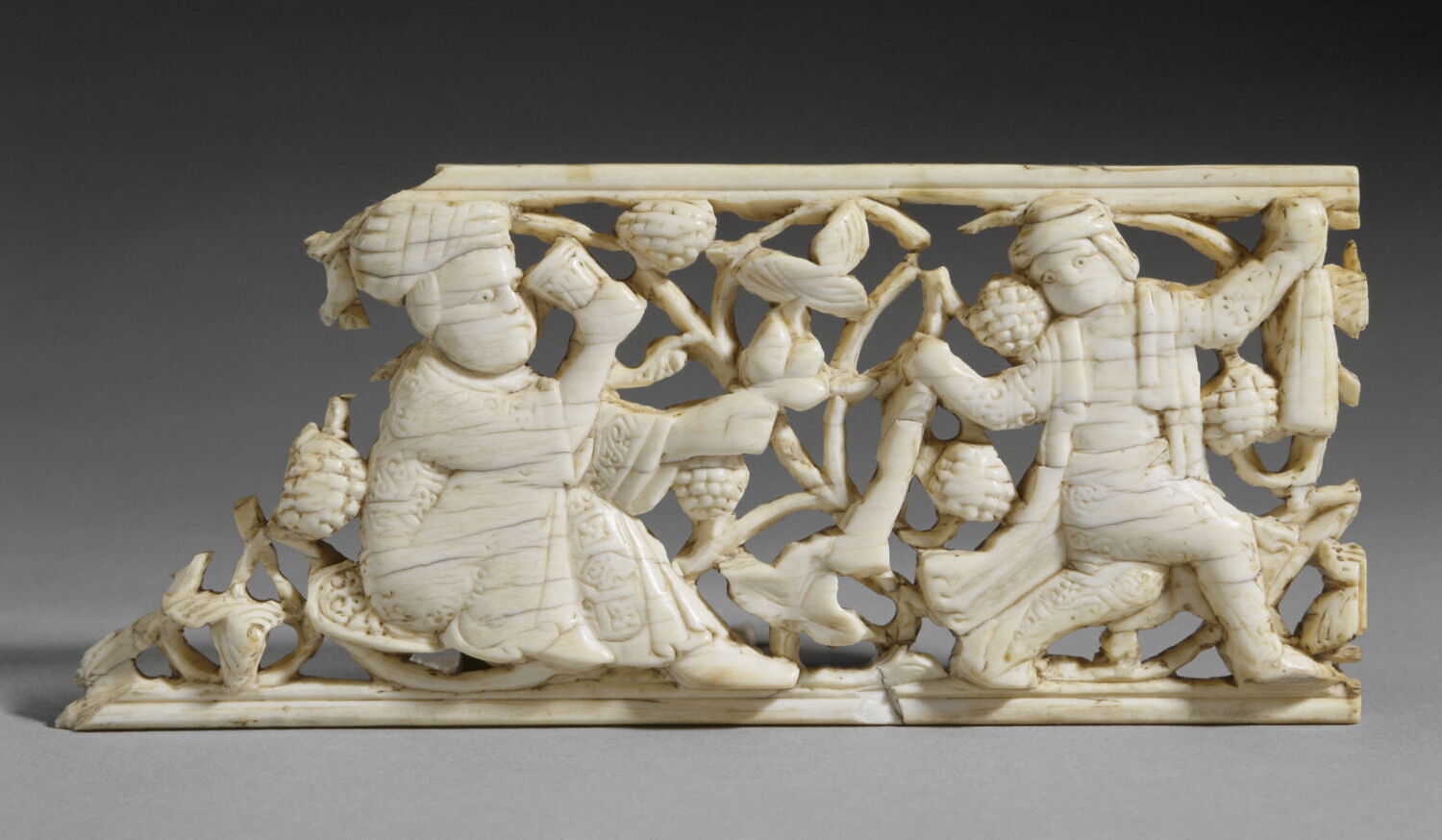
Panel de marfil con bailarina
Discussion
The evidence examined allows us to affirm that dance was present in numerous societies of the Middle East and North Africa from very early periods. Both archaeological sources from Ancient Egypt and medieval Arab-Islamic texts document the existence of dance in religious, social, festive, and courtly contexts. Likewise, medieval sources describe professional performers, specialized terminology, repertoires, and stage elements associated with dance.
However, the existence of these historical manifestations does not, in itself, constitute proof of continuity with the forms of Bellydance documented from the late 19th century onward. As Garfinkel (2003), Shachter (2014), and Shay (2026) point out, the main difficulty lies in the fact that available sources allow us to confirm the presence of dance, but rarely provide sufficient information to accurately reconstruct movements, techniques, choreographic structures, or modes of transmission.
This issue is particularly evident in the case of Ancient Egypt. Although abundant iconographic representations and textual references exist, images are static and follow specific artistic conventions. As Shachter (2014) warns, even determining which figures actually represent dance scenes constitutes a methodological challenge. Similarly, Garfinkel (2003) argues that iconography allows us to identify the existence of dance, but not to reconstruct how movements were actually performed.
The critiques formulated by Shay (2026) also help explain why certain theories gained such wide circulation during the 20th century. According to this author, numerous works on dance reproduced Orientalist conceptions that associated the Middle East with spirituality, antiquity, and mystery. In this context, attributing to Bellydance a remote origin connected to goddesses, fertility rituals, or millenary practices provided cultural legitimacy to a form of dance that, in many contemporary contexts, was primarily perceived as entertainment.
The proposals of Dinicu (1964), Buonaventura (1990), Al-Rawi (1999), and Stewart (2000) should be understood within this intellectual framework. Although they contributed to popularizing interest in the history of Bellydance, their hypotheses often rely on intercultural comparisons, symbolic associations, and speculative reconstructions that go beyond what the available evidence allows us to demonstrate.
Therefore, it is necessary to distinguish between the historical existence of dance in different societies and the possibility of demonstrating a direct historical continuity between those manifestations and contemporary Bellydance. The first statement is widely supported by available sources; the second remains a hypothesis that has not been conclusively demonstrated.
Conclusions
Theories regarding the origins of Bellydance can generally be grouped into three major currents: spiritual interpretations linked to the Mother Goddess cult, proposals that place its origins in Ancient Egypt, and critical perspectives that question the possibility of establishing a demonstrable historical continuity.
The review of archaeological, textual, and historiographical sources allows us to conclude that dance was widely present in societies of the Middle East and North Africa since Antiquity. However, the methodological limitations inherent to the available evidence prevent the precise reconstruction of the characteristics of these practices and, therefore, the establishment of an uninterrupted historical line of continuity with the forms of Bellydance developed since the late 19th century.
Consequently, the historiographical problem does not lie in determining whether dance existed in Ancient Egypt or in medieval Arab-Islamic societies, but rather in establishing what relationship can be demonstrated between those manifestations and the forms of dance currently known as Bellydance.
In light of recent research, it is more appropriate to consider that available evidence allows us to document the historical existence of multiple dances in the region, but does not conclusively demonstrate a direct continuity between them and contemporary Bellydance. Therefore, interpretations that present such continuity as an established fact should be understood as historiographical hypotheses rather than as definitive conclusions
Footnotes
[1] Kitāb al-Aghānī (Libro de las canciones), Anécdota V:353-3.
[2] Kitāb al-Aghānī (Libro de las canciones), Anécdota I:291.
Bibliographic References
Al-Rawi, R. F. (1999). Grandmother’s secrets: the ancient rituals and healing power of belly dancing. Interlink Books.
Bleiberg, E. (2005). Arts and humanities through the eras: Ancient Egypt (2675–332 BCE). Thomson Gale.
Buonaventura, W. (1990). Serpent of the Nile: Women and dance in the Arab world. Interlink Books.
Cummings, J. M. (2000). Temple dancing in ancient Egypt (Tesis doctoral, New York University). ProQuest Dissertations & Theses.
Dinicu, C. V. (1965). Belly Dance and Childbirth. Sexology, April.
Dox, D. (2005). Spirit from the body: Belly dance as a spiritual practice. En A. Shay & B. Sellers-Young (Eds.), Belly dance: Orientalism, transnationalism and harem fantasy (pp. 304–342). Mazda Publishers.
Garfinkel, Y. (2003). Dance at the dawn of agriculture. University of Texas Press.
Hobsbawm, E. (1983). Introduction: Inventing traditions. En E. Hobsbawm & T. Ranger (Eds.), The invention of tradition (pp. 1–14). Cambridge University Press.
Jaldún, I. (1977). Introducción a la historia universal (Al-Muqaddimah). Fondo de Cultura Económica.
Karayanni, S. S. (2009). Dancing fear and desire: Race, sexuality and imperial politics in Middle Eastern dance (2nd ed.). Wilfrid Laurier University Press.
Kinney, L. (2008). Dance, dancers and the performance cohort in the Old Kingdom. Archaeopress.
Lexová, I. (1999). Ancient Egyptian dances. Courier Dover Publications. (Trabajo original publicado en 1935)
Meyer-Dietrich, E. (2009). Dance. En W. Wendrich (Ed.), UCLA encyclopedia of Egyptology. University of California, Los Angeles.
Said, E. W. (1978). Orientalism. Pantheon Books.
Sawa, G. D. (2015). An Arabic musical and socio-cultural glossary of Kitāb al-Aghānī (Vol. 110). Brill.
Sellers-Young, B. (2014). Masculine or feminine, Ancient or contemporary: “Raqs sharqi” and a world of converged images. The World of Music (New Series), 3(2), 123–139.
Shachter, B. (2014). Who is the ancient Egyptian dancer? En K. Soar & C. Aamodt (Eds.), Archaeological approaches to dance performance (pp. 15–29). BAR Publishing.
Shay, A. (2014). The male dancer: Bodies, spectacle, sexualities. Routledge.
Shay, A. (2026). Orientalism and myths of origin. En A. Shay (Ed.), Middle Eastern dance: Histories, theories, performances. Routledge.
Shay, A., & Sellers-Young, B. (Eds.). (2005). Belly dance: Orientalism, transnationalism and harem fantasy. Mazda Publishers.
Spencer, P. (2003). Dance in ancient Egypt. Near Eastern Archaeology, 66(3), 111–121.
Stewart, I. (2000). Sacred woman, sacred dance: Awakening spirituality through movement and ritual. Inner Traditions.
Tyler, J. S. (2010). Reception or deception? Approaching Greek dance through vase-painting. En F. Macintosh (Ed.), The ancient dancer in the modern world: Responses to Greek and Roman dance (pp. 77–98). Oxford University Press.
Van Nieuwkerk, K. (1995). A trade like any other: Female singers and dancers in Egypt. University of Texas Press.
* Automatic translation to english

1 comment