Florencia Klot
Universidad de la República
Asociación Civil Estudio Sahar
danzasdeoriente@gmail.com
Abstract: This study analyzes the contemporary practice of belly dance in Uruguay, aiming to determine whether a distinct Uruguayan style of the dance can be identified. It constructs a theoretical framework based on concepts such as authenticity, cultural hybridization, globalization, glocalization, and Orientalism, integrating these with findings from a survey of 101 individuals connected to the belly dance community and interested audiences. The results indicate that the community does not recognize the existence of a consolidated national style in technical or aesthetic terms. However, they reveal a distinctive way of experiencing and understanding the practice—characterized by a strong focus on well-being, self-discovery, and spirituality, alongside significant influence from international figures, particularly from Egypt. The study also highlights the persistence of Orientalist imagery and the local appropriation of a transnational practice. It concludes that belly dance in Uruguay represents a glocalized expression with unique cultural characteristics, even though it does not constitute a distinct national style.
Keywords: Bellydance, arabic dance, Uruguay, glocalization
Introduction
Within the international bellydance community, it is common to refer to styles associated with particular countries or regions (such as Egyptian, Argentine, Turkish, Russian, or Lebanese). These designations go beyond technical and aesthetic characteristics and express different forms of transmission, professionalization, and identity within broader debates on authenticity and cultural hybridization.
In Uruguay, bellydance has been practiced for several decades and has an active community of students, teachers, and dancers, as well as a continuous circulation of international figures. However, unlike other contexts in which clearly defined national styles [1] are identified, the question of whether a “Uruguayan style” of bellydance exists remains open.
This study aims to analyze the current practice of bellydance in Uruguay through an approach that combines a theoretical framework with data obtained from a survey directed both at members of the local community and at interested members of the public. Based on this survey, the predominant meanings associated with contemporary practice are examined in order to investigate whether it is possible to speak of a Uruguayan style or, alternatively, of particular features that characterize the way bellydance is experienced and practiced in the country.
Conceptual and Terminological Framework
Although there is currently no consensus regarding the most appropriate terms for referring to this dance (Barrionuevo, 2025), in the Uruguayan context the most widely used designation is Arabic Dance (Klot Survey, 2025). However, this study uses the term bellydance, since it is the most widespread in international academic debates related to globalization, cultural hybridization, and Orientalism (Dox, 2006; McDonald, 2010).
The bellydance community can be conceptualized as a transnational cultural community, constituted within the framework of contemporary globalization and shaped by tensions between processes of cultural homogenization and heterogenization (Appadurai, 2001, cited in Barrionuevo, 2015). At the same time, this community operates as a subculture with its own norms, debates, traditions, and partial consensuses, without constituting a homogeneous or closed entity (McDonald, 2012, cited in Barrionuevo, 2015).
Within this framework, the notion of authenticity occupies a central place in the field of bellydance. According to McDonald (2010), authenticity is often defined as the pursuit of a perfect replica or faithful recreation of a past tradition. This conception implies a protectionist stance aimed at controlling external influences and establishing criteria of legitimacy.
Canclini (2000), for his part, defines hybridization as those sociocultural processes in which structures or practices that previously existed separately are combined to generate new forms, objects, and practices. These combinations may arise either unintentionally or through individual or collective creativity and are particularly relevant for analyzing artistic practices that circulate globally, such as bellydance.
In relation to processes of cultural circulation, McDonald (2010) distinguishes between globalization, understood as the increasing movement of people, goods, ideas, and aesthetics on a global scale, and transnationalism, a concept that emphasizes flows occurring between different nation-states. In the case of bellydance, these dynamics are central to understanding its expansion and contemporary configuration. The notion of glocalization, in turn, makes it possible to analyze how a globally circulating practice is appropriated, reinterpreted, and resignified within specific local contexts, giving rise to particular configurations that do not respond to a simple process of cultural imposition, but rather to dynamic processes of negotiation and meaning-making (McDonald, 2010).
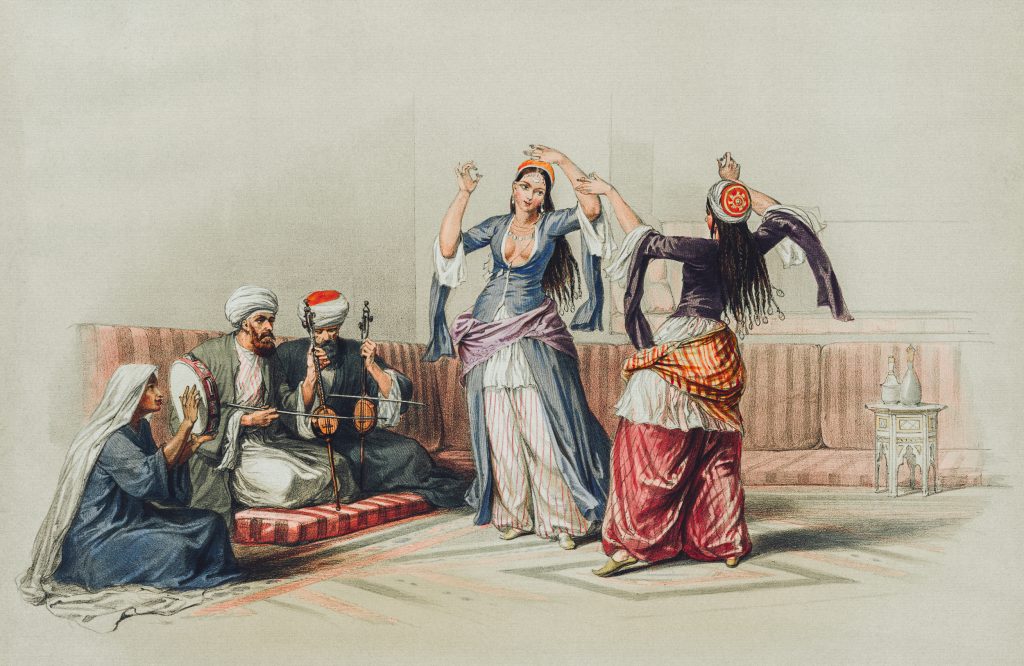
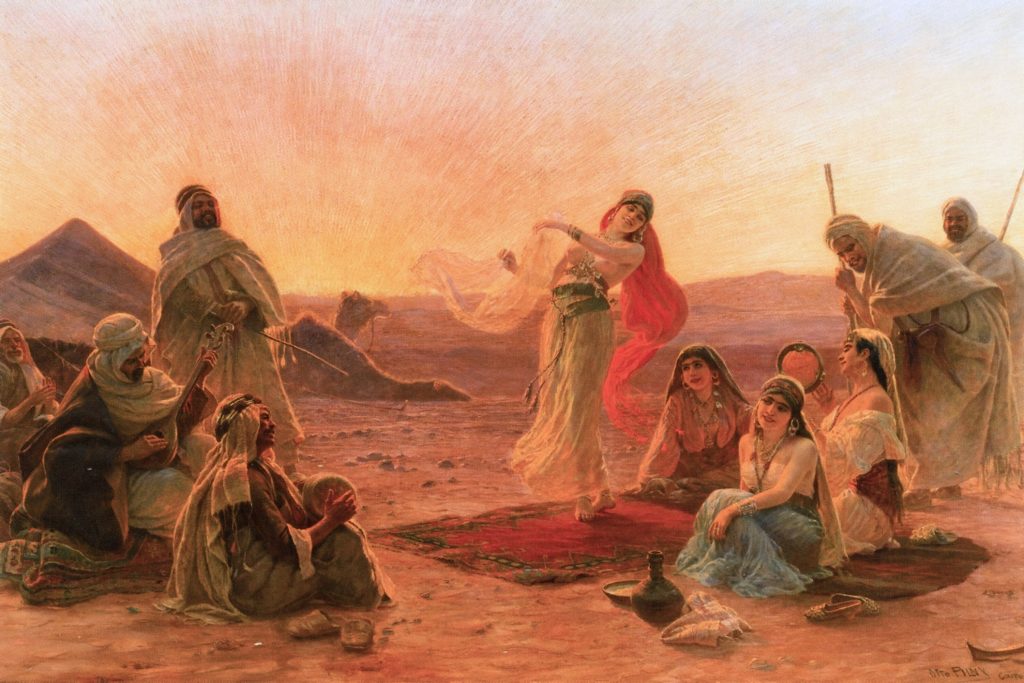
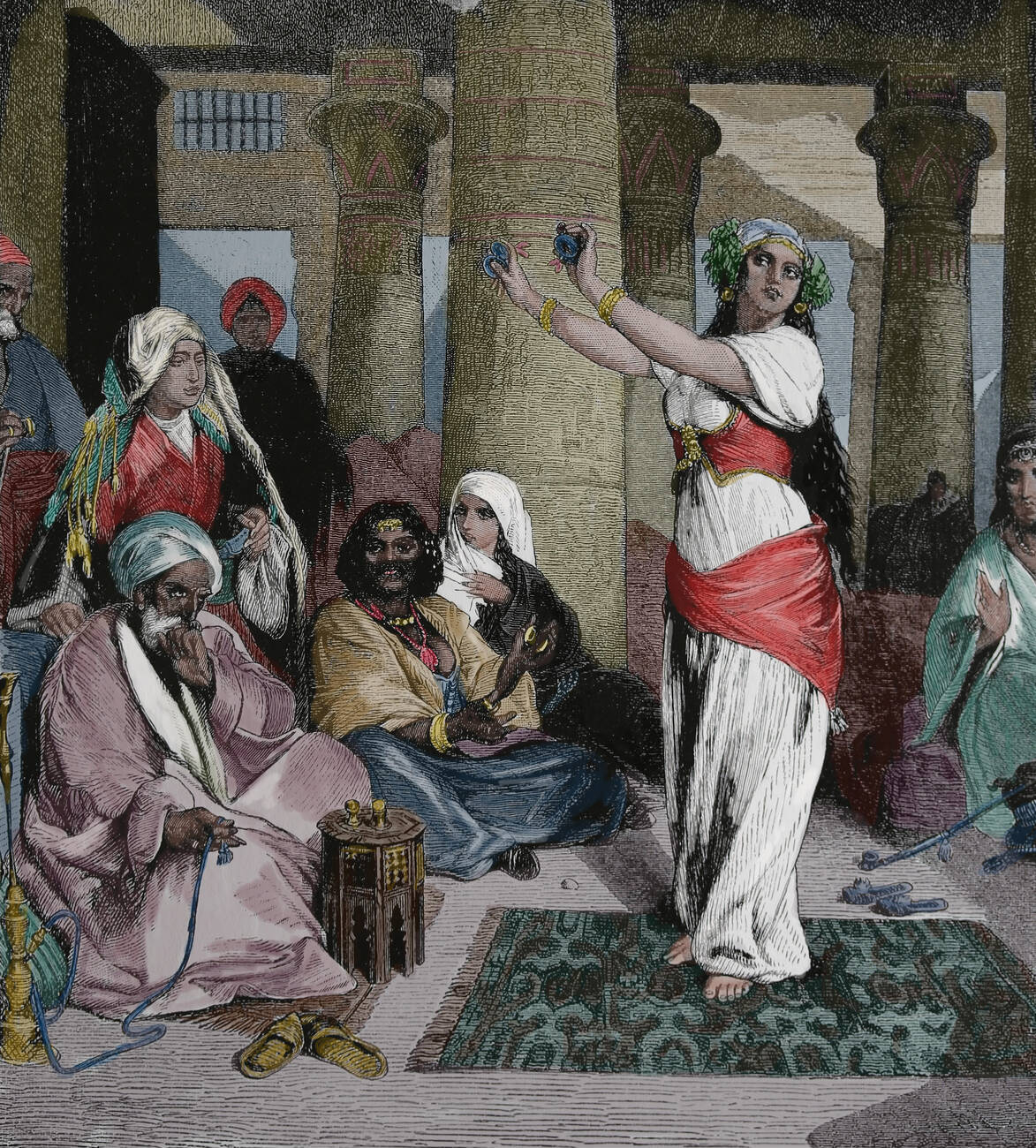
Finally, the concept of Orientalism is essential to the analysis of representations associated with bellydance. Edward Said (1978) defines Orientalism as a system of thought and representation produced by the West that constructs “the Orient” as an exoticized, inferior, and essentialized object, thereby legitimizing relations of power, domination, and cultural control. Orientalism is not limited to a set of visual or narrative stereotypes, but constitutes a discourse that organizes knowledge about the Orient and conditions the ways in which it is interpreted, studied, and represented, both in academic contexts and in artistic practices.
Analysis and Discussion of Results
In order to analyze the possible existence of a national bellydance style in Uruguay, the study explored the perception and recognition of such a style at both local and international levels. The results show that only 5% of respondents believe that a Uruguayan style exists, while the majority are either unaware of its existence (63.4%) or deny it (31.7%), without being able to identify consistent technical or aesthetic features. This suggests that, according to the community, a national style has not become consolidated in classical terms. These findings are consistent with McDonald (2010), who points out that the transnational circulation of knowledge and aesthetics, characteristic of bellydance, allows for local forms of appropriation, reinterpretation, and resignification without necessarily generating a consolidated national style, highlighting the relevance of glocalization as a framework for understanding these dynamics.
Regarding processes of transmission and training, the survey shows that bellydance in Uruguay has not developed primarily through Arab communities established in the country, but rather through transnational training circuits. A significant flow [2] can be observed, linked to local professionals who travel abroad to train with native or international specialists, as well as to the strong circulation of global cultural products. In this regard, Egypt appears as the main formative and aesthetic influence, accompanied by a significant regional influence from Argentina and, to a lesser extent, Lebanon and Türkiye, while Brazil has a considerably smaller impact. From the conceptual framework of hybridization proposed by Canclini (2000), these circulation processes could give rise to new local combinations; however, the data do not demonstrate this. This absence of visible hybridization raises questions about the ways in which the local community negotiates global influences and suggests that the emphasis on notions of authenticity—strongly present in the open-ended survey responses—may operate as a factor that limits or regulates the explicit mixing of traditions within the practice.
The analysis of representations associated with bellydance reveals a strong persistence of Orientalist imaginaries: 98% of respondents associate this dance with the exotic, the sensual, the mystical/spiritual, female empowerment, and the ancestral. These results demonstrate the continued relevance of Orientalism as a cultural discourse that constructs “the Orient” as an essentialized object from a Western perspective (Said, 1978), often naturalized even by the dancers themselves, who are not always aware of the constructed nature of these representations (Dox, 2006a).
Finally, regarding the meanings attributed to the dance, the data show that most people who practice bellydance in Uruguay do so primarily as a tool for well-being, healing, or spiritual connection (75.6%), as well as a space for personal exploration and self-knowledge (63.2%). In contrast, motivations exclusively linked to professional development or a stage career appear in a considerably smaller percentage. This way of understanding and experiencing the dance is related to what Dox (2006b) identifies as spiritual bellydance [3], in which the practice focuses more on internal and transformative experience than on the strict reproduction of a particular style or technique.
Conclusions
Based on the survey results, it can be concluded that, although bellydance in Uruguay is shaped by clear transnational influences, these have not consolidated into a distinct national style. Nevertheless, the data make it possible to identify a particular way in which the bellydance community in Uruguay experiences and practices the dance, predominantly conceiving it as a space for well-being, spirituality, and self-knowledge—a form of Spiritual Bellydance. In this sense, bellydance practice in Uruguay can be understood as a globalized form of bellydance, shaped by global flows, persistent Orientalist imaginaries, and local appropriations, which generates characteristic features without consolidating a technically and aesthetically distinct local style recognized at the international level.
Appendix
Survey ‘Bellydance in Uruguay Today’
Methodology
To collect the data, an anonymous survey was designed and distributed online in 2025. It was addressed both to members of the bellydance community in Uruguay (students, teachers, and dancers) and to members of the general public interested in the dance. The questions combined closed- and open-ended formats, allowing the survey to identify both general trends and subjective perceptions and meanings associated with the practice of bellydance in the Uruguayan context.
Sample Characteristics
The survey was completed by 101 people. Of the total number of respondents, 69.3% identified themselves as part of the bellydance community, while 30.7% belonged to the general public without direct involvement in the practice. Among those who identified as part of the community, in terms of their role within the discipline, 36.6% defined themselves as students, 9.9% as teachers, and 22.8% as both.
Terminology Used to Refer to the Dance
When asked which term they usually use to refer to this dance, 67.7% reported using the term Arabic Dance, while 13.9% use Bellydance and 8.9% use Belly Dance. Other terms appeared less frequently, including Oriental Dance (5%) and Raqs Sharqi (2%).
Regarding the reasons for this terminological choice, respondents mainly indicated that it is the term used in the spaces where they take classes, the name most easily recognized by the general public, the term most widely used locally, and the one they consider most culturally appropriate.
Orientalist Representations Associated with the Dance
The survey explored the ideas or imaginaries associated with bellydance. The results show a strong presence of Orientalist representations. Only 2% of respondents stated that they did not associate the dance with any Orientalist image. The most frequent associations included the exotic, the sensual, the mystical/spiritual, the ancestral, and the sacred feminine.
Practices, Motivations, and Meanings Attributed to Bellydance
Regarding the reasons why people practice bellydance, 75.6% reported doing so as a tool for well-being, healing, or spiritual connection. Likewise, 63.2% stated that they use the dance as a space for personal exploration and self-knowledge. In contrast, a smaller percentage indicated motivations linked exclusively to professional or stage development.
Predominant Influences and Training Backgrounds
Regarding influences on bellydance training and practice (technique, aesthetics, music, and terminology), respondents mainly identified: Egypt: 75.6%, Argentina: 36.6%, Lebanon: 25.6%, Türkiye: 15.9%, Russia/Ukraine: 13.4%, Brazil: 9.8%.
Perception of the Existence of a Uruguayan Bellydance Style
When asked whether they considered that a Uruguayan style of bellydance exists, 63.4% responded that they did not know whether such a style exists, 31.7% considered that no distinct style exists, and only 5% stated that an identifiable Uruguayan style does exist, although they were unable to clearly describe its distinctive characteristics. Regarding the international recognition of Uruguay’s bellydance community, only 7.9% believed that Uruguay is internationally recognized, while 21.8% considered it only partially recognized. By contrast, 19.8% believed that it is not internationally recognized, while 50.5% stated that they did not know.
Footnotes
[1] “For example, bellydance in Argentina has developed its own characteristics and style; we may say that, as this dance entered the country, it adapted to the local context and became nationalized in different ways.” (Barrionuevo, 2015).[2] Cultural flows: Appadurai defines cultural globalization as a set of irregular and fluid flows (ethnoscapes, mediascapes, technoscapes, financescapes, and ideoscapes) through which people, images, ideas, technologies, and capital circulate, producing mobile, fragmented, and non-homogeneous cultural configurations in different local contexts (Appadurai, 2001).
[3] Spiritual Bellydance: a contemporary current within bellydance that conceives dance as a practice of self-knowledge, healing, and personal transformation, in which the emphasis shifts from aesthetic or technical reproduction toward subjective experience, bodily and emotional connection, and the symbolic and ritual dimensions of movement. Within this approach, authenticity is defined less by fidelity to a specific cultural canon and more by the internal experience and meaning that the practice acquires for the dancer (Dox, 2006b).
References
Barrionuevo, M (2025). Manual de fundamentos teóricos de Danza Arabe Nivel Inicial. Estudio Sahar.
Klot, F. (2025). El bellydance en Uruguay hoy: encuesta académica. Encuesta inédita.
Montevideo.
Dox, D. (2006a). Dancing Around Orientalism. Middletown: Wesleyan University Press.
Traducción Estudio Sahar.
Barrionuevo, M. (2015). El bellydance en contexto: los procesos de Hibridación y
nuevas consideraciones sobre el cuerpo. Estudio Sahar
Dox, D. (2006b). El bellydance como una práctica espiritual. Traducción/resumen de
Estudio Sahar
Canclini, N. G. (2000). La globalización: ¿productora de culturas híbridas? [Ponencia]. III
Congreso Latinoamericano de la Asociación Internacional para el Estudio de la
Música Popular (IASPM-AL) (Bogotá, Colombia, 23 al 27 de agosto de 2000)
McDonald, C. E. (2010). “Belly Dance and Glocalisation: Constructing Gender in Egypt and on
the Global Stage.” PhD Thesis. University of Exeter.
Said, E. W. (1978) Orientalismo. Traducción de Maria Luisa Fuentes. Pantheon Books.
Appadurai, A. (2001). La modernidad desbordada. Dimensiones culturales de la
globalización. Edición en español. Ediciones Trilce.
*automatic translation for english version